Healthy Meal Prep Ideas for People Who Do Not Have a Free Sunday
Skip the four hour Sunday: double tonight's dinner, cook parts that mix and match, and keep what you make where you will see it.
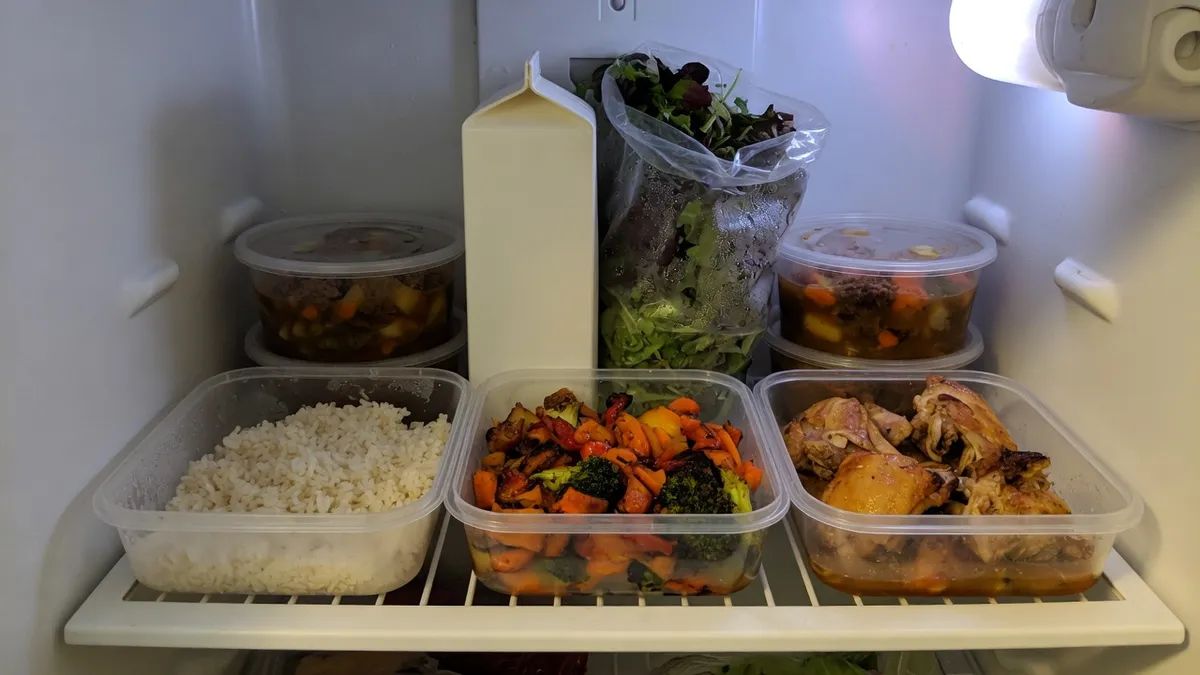
It is Thursday and the refrigerator door is open. Two of the five identical containers you filled on Sunday sit at the back of the middle shelf, behind the milk and a bag of salad you meant to use. You gave up most of a Sunday afternoon to a list of healthy meal prep ideas, cooked five lunches, and ate three.
That does not make you undisciplined. The plan asked for too much. The Bureau of Labor Statistics found that in 2025 Americans aged 15 and over spent an average of 43 minutes a day on food preparation and cleanup, and a four hour Sunday asks for more than five days of that in one afternoon. Sunday was also supposed to be the day you rested.
What follows is a way to batch cook that fits the time you already spend in the kitchen, with healthy food that still tastes good on Thursday.
Three ways to batch cook
Cook one thing in bulk and repeat it. A tray of chicken and a pot of rice become five identical lunches, which is the simplest shop of the three, but by the fourth day most people are sick of it and the fifth container goes uneaten.
Cook components that mix and match. A grain, a protein, a tray of roasted vegetables and two sauces go together five different ways, so this is the version you are least likely to get bored of, although it takes more setup the first time.
Double whatever is already on the stove tonight. The pot is hot, the board is out and you are washing up anyway, so the extra work is mostly chopping and a few more containers.
Start with the third. It needs no extra evening, and when it fails you lose one dinner rather than a week of them. Once doubling is a habit, move on to components.
Healthy meal prep ideas that mix and match
Components work because one batch of each turns into several different meals. Cook one or two things from each column below, keep them in separate containers, and put a bowl together each night.
| Grains | Proteins | Vegetables | Sauces |
|---|---|---|---|
| Brown rice | Roast chicken thighs | Roasted broccoli | Yogurt with lemon and herbs |
| Quinoa | Cooked lentils | Roasted sweet potato | Peanut lime sauce |
| Farro | Black beans | Roasted peppers and onions | Salsa |
| Whole wheat pasta | Baked tofu | Sautéed greens | Pesto |
| Potatoes | Hard boiled eggs | Roasted carrots | Tahini with garlic |
Chicken, brown rice, roasted broccoli and peanut lime sauce is one dinner. Black beans, the same rice, roasted peppers and salsa is a different one. Lentils, farro, sweet potato and tahini is a third. That is three dinners from about five things you cooked, and none of them tastes like the night before.
Beans, lentils and whole grains are cheap, filling, and hold up well in the fridge, which makes them the backbone of most healthy meal prep. Add raw things on the night: a handful of spinach, sliced cucumber, a squeeze of lemon, or some chopped herbs.
Which foods reheat well
Braises, stews, soups, chilis, cooked sauces, roasted vegetables, grains and beans reheat well, and some taste better on day two. Anything crisp, fried, or thickened with cream or cheese comes back soggy or separated, and so does a salad that was tossed in its dressing ahead of time.
So batch the parts that keep and add the rest on the night you eat. Cook the chicken on Sunday and dress the salad on Thursday. The parts that reheat badly are usually the quick ones, like frying an egg or dressing greens, so doing them fresh takes a couple of minutes.
How long it keeps, and where to keep it
The FDA's refrigerator and freezer storage chart gives cooked meat dishes, cooked poultry dishes, soups and stews 3 to 4 days in a refrigerator at 40°F or colder. That is why a Sunday batch runs out of road around Wednesday or Thursday.
If you cook on Sunday for the whole week, freeze the Thursday and Friday portions on Sunday rather than hoping they last. The same chart puts cooked meat dishes, soups and stews at 2 to 3 months in the freezer and cooked poultry dishes at 4 to 6 months, and notes those freezer times are about quality, since food kept frozen at 0°F stays safe. Move tomorrow's portion to the fridge the night before so it thaws.
Container shape matters more than it seems. Flat rectangular containers line up side by side on a shelf and stack in the freezer. Round tubs leave gaps and get pushed to the back, where they are easy to forget. Split each batch across a few flat containers, write the date on a strip of tape on the lid, and keep them in a row at the front of the fridge at eye level so you see them every time you open the door.
Count what you ate, not what you cooked
Say a Sunday takes four hours and fills five containers. Spread across five meals that is 48 minutes of cooking each. If only three get eaten, it was 80 minutes each, plus the food you threw away. A smaller plan that gets fully eaten beats a bigger one that doesn't.
Tonight, while the pot is already on, double one thing from the list above and put half of it away before you sit down. On Thursday, count how many containers came back empty. After three weeks you will know how much your house really eats, and you can cook for that number.
This article is for informational purposes only and does not constitute medical, financial, or professional advice.