What a Maid of Honor Does (And What the Job Costs Her)
The duties are the same for a maid and a matron of honor, and an itemized example of her bill gives you the number to say before she says yes.
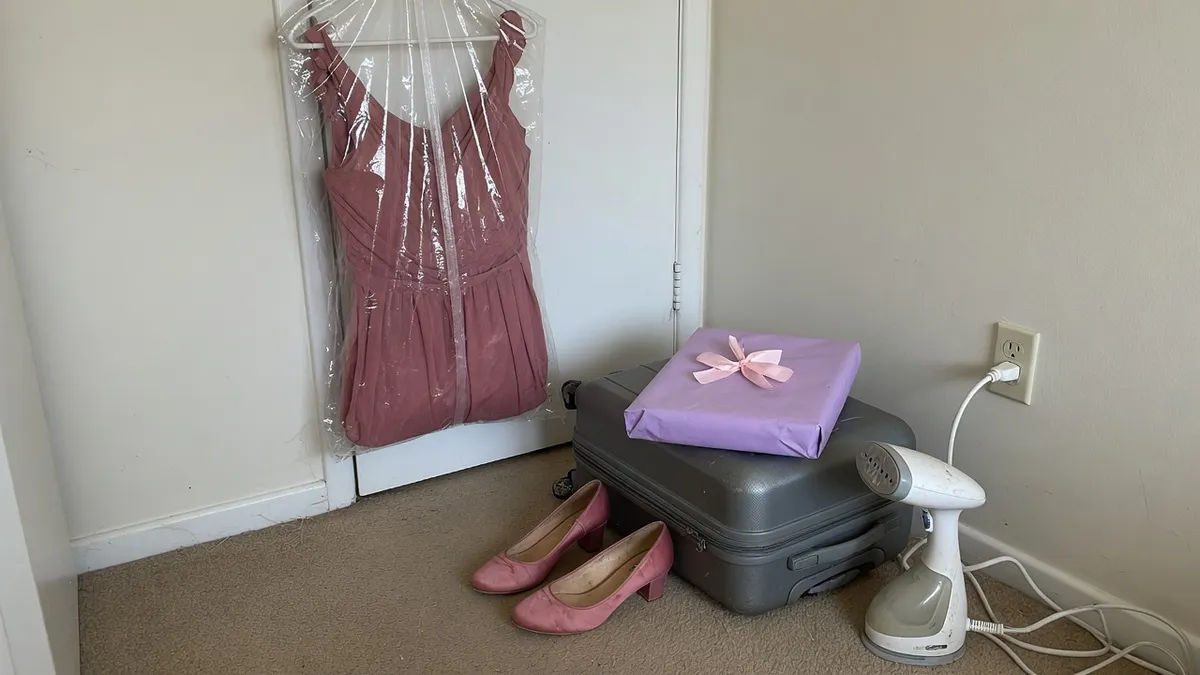
The box is on the kitchen counter with the lid off. It holds a candle, a ribbon, and a card that asks whether she will be your maid of honor.
You chose her because she is the person you would call first, and the card is how you tell her. Saying yes to it will cost her money, and you have not added up how much.
Maid or matron
If she is married, the title is matron of honor. If she is single, it is maid of honor. The duties are the same for both.
What the job is
Maid or matron of honor, she is the lead attendant. On the day, she is the person the rest of the wedding party takes direction from, and the person you hand things to. During the ceremony she holds your bouquet from the moment you reach the front until you turn to walk back out, and she holds the groom's ring when there is no ring bearer with real rings. If you ask her to, she signs the license as a witness. At the reception she gives the maid of honor speech.
It also costs her money, on seven lines: the dress, the alterations, a share of the shower, a share of the bachelorette, hair and makeup on the day, travel to the wedding, and a gift. She plans or co hosts the shower, and hosting means paying a share of it, split by the number of hosts. She plans the bachelorette to the size you ask for, and the attendants split that cost between them. She books it, pays the deposit, and collects the other bridesmaids' shares afterward.
What the job costs, as an example
| Line | Who sets it | Assumed here |
|---|---|---|
| Dress | You, when you choose it | 180 dollars, off the rack |
| Alterations | You, through the dress you chose | 60 dollars, a hem and a take in |
| Her share of the shower | She and her co hosts, by the number of hosts and the place | 150 dollars, one of four hosts, held at a home |
| Her share of the bachelorette | You, when you say where and for how long | 400 dollars, one weekend within driving distance, two nights of a split rental |
| Hair and makeup on the day | You, if you require it | 150 dollars, one artist doing hair and face on the morning |
| Travel to the wedding | You, when you sign the venue contract | 300 dollars, a drive and one hotel night |
| Gift | She | 100 dollars, one item from your registry |
| Total, one example | 1,340 dollars |
Every figure is an assumption. Put your dress price, your weekend, and your venue in and read your own total.
Five of the seven lines are set by you after she has said yes, so she agrees to them before she can see a figure.
The bachelorette line moves the most. A night in her own city is dinner and a ride home. A weekend away is two nights of a split rental, a tank of gas or a flight, and every meal in between, and the assumed 400 dollars is the driving distance version. Hair and makeup is a line you add when you want matching hair in the photographs, and if you pay for it yourself, her total in this example drops to 1,190 dollars.
Say the number when you ask
Tell her the total before she opens the box, 1,340 dollars in this example, and name the lines she is agreeing to before she can see them: the dress and its alterations, one bachelorette weekend within driving distance, hair and makeup on the morning, and travel to wherever you marry.
The number you say will move, because the decisions that set it are still ahead of you. Say that too, and name which lines you will hold. When a line grows past what you said, the growth is yours to cover.
If the figure is more than she can spend, split it. She keeps the speech, the bouquet, and the ring, and a bridesmaid with more money hosts the shower and plans the bachelorette.
This article is for informational purposes only and does not constitute medical, financial, or professional advice.