What Renting a Moving Truck Actually Costs Compared to Hiring Movers
Mileage, fuel, the pads, the dolly, the waiver, the deposit and two days of your own time are the lines that decide which one is cheaper.
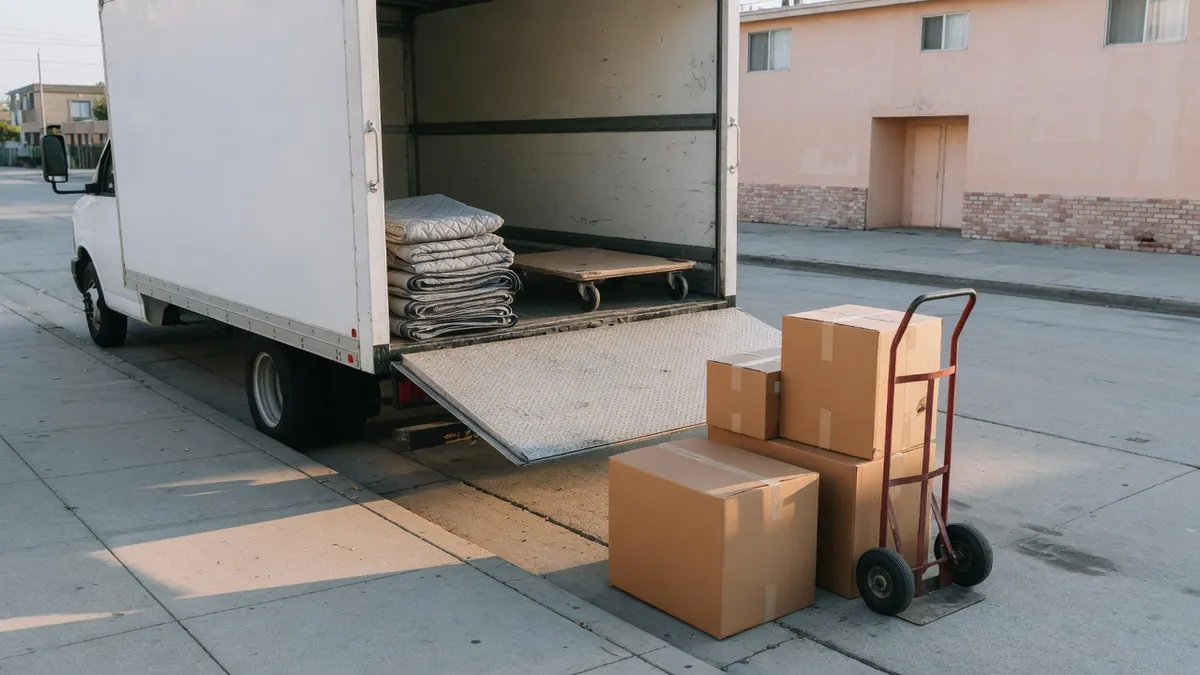
You are on the reservation page with a second tab open on a mover's contact form. Renting a moving truck starts at $19.95 on U-Haul's own page, which is less than the pizza you owe the friends who show up to load it. The mover you called wants a video walkthrough of every room before anyone will put a number on paper.
One of those two prices is finished. The other has seven lines under it.
The advertised rate prices the truck sitting in the lot
For a local move, U-Haul advertises a flat rate starting at $19.95 plus a per mile fee, and the same page says mileage rates change with location, season and day of the week. The per mile rate appears nowhere on it.
One way rentals are priced differently. The reservation includes a mileage allowance and a set number of days, and past them the company charges $1.00 per mile and $40 per day. All three of those figures were checked on that page in August 2026.
Keep the two products apart. The $19.95 flat rate is the in town truck. The mileage allowance, the $1.00 mile and the $40 day belong to the one way truck rental, which is the product that competes with an interstate mover, and the arithmetic below is that move.
Fuel is the line people guess at
Renting a moving truck puts the fuel on your own card, and there is no official figure for what a loaded box truck returns to the gallon.
Take a 1,200 mile move. At 10 miles per gallon, an assumption rather than a published figure, the drive burns 120 gallons. The Energy Information Administration put regular gasoline at $4.085 a gallon in the week of August 24, 2026, so those 120 gallons run $490. At 8 miles per gallon the same drive burns 150 gallons and costs $613. Buy the 120 gallons in California, where that same weekly report shows $5.450, and you pay $654 for the identical drive.
Gasoline is 93.8 cents a gallon higher than it was a year ago, so those same 120 gallons cost $113 more than they would have in the summer of 2025.
Past the included miles, each mile costs $1.00 to the rental company plus about 41 cents of gasoline at 10 miles per gallon. Call it $1.41 a mile at that fuel economy. Three hundred miles over your allowance is $423.
Four more lines wait at the counter
A moving truck rental prices damage coverage, furniture pads and straps, and a dolly as separate items, and it takes a deposit. Write down all four before you agree to anything.
Ask which coverage option pays for your boxes and which pays only for their truck, and get the price of each. Ask whether the deposit is a charge or a hold, and when it clears. All four are priced after you have already chosen the truck, which is the order that makes them easy to say yes to.
An interstate mover has to put one number in writing
A mover taking your things across a state line works under 49 CFR Part 375. "FMCSA requires your mover to provide written estimates on every shipment transported for you. Your mover's verbal quote of charges is not an official estimate since it is not in writing." The same rules require a survey of your household goods, on site or by video, unless you waive it in writing. That is why the mover asked to see the rooms.
The estimate arrives in two forms. A binding estimate guarantees the total cost of the move based on the quantities and services shown on it, so read that list closely: a box you add on the morning is outside what was guaranteed. Under a non binding estimate the mover cannot require you to pay more than 110 percent of the figure at delivery and bills the rest after 30 days, and if you are unable to pay that 110 percent when the truck arrives, the mover may place your shipment in storage at your expense.
Sixty cents a pound is the cheaper liability choice
Every estimate has to state two liability choices. One is Full Value Protection. The other is a waiver under which the mover assumes liability for no more than 60 cents per pound per article. Weigh the item and multiply by 0.60. A 40 pound television is settled at $24. A 12 pound laptop is $7.20.
Ask what Full Value Protection adds to the estimate, because the regulation makes the company state the option and you want its price sitting next to that $24.
Where the two totals cross
Volume decides this before distance does. A one bedroom apartment loads in a morning. Four bedrooms and a garage is two days with the truck in the driveway, one friend you owe dinner, and a second who cancels Friday night.
Price those two days. Say you make $70,000. Divide by the 260 working days in a year and one day of yours is $269, so the two days are $538.
Now put an estimate against it. Say the mover comes back at $2,400, which is an illustration and the one number here you replace with your own. Take off your $538 of time, then the $250 your reservation screen shows for the base rate, the pads, the dolly and the coverage, and $1,612 of that estimate is left to spend on miles. At $1.41 a mile, renting a moving truck is the cheaper option up to about 1,140 miles, and the written estimate is cheaper past it. That prices every mile at the over allowance rate. Miles inside your included allowance cost only the 41 cents of gasoline, which pushes the crossing further out.
A slow load moves that line further than a long drive does. Each extra day costs $40 for the truck and $269 of your own pay, which pulls the crossing from about 1,140 miles down to about 920.
The Bureau of Labor Statistics prices moving, storage and freight expense every month. In the twelve months to July 2026 that index fell 3.9 percent, while rent of primary residence rose 2.9 percent.
| Line | Your number |
|---|---|
| Truck base rate for your dates | $____ |
| Miles past the allowance, at the rate on your quote screen | $____ |
| Fuel, your gallons times the pump price | $____ |
| Furniture pads and straps | $____ |
| Dolly | $____ |
| Damage coverage for the days you hold the truck | $____ |
| Deposit, if any of it stays with them | $____ |
| Two days of your own pay | $____ |
| Truck total | $____ |
| Binding written estimate | $____ |
| Full Value Protection on that estimate | $____ |
| Anything added on moving day, outside the guaranteed quantities | $____ |
| Mover total | $____ |
Do this before you book
Open a reservation for your real dates and your real zip code and take it to the last screen before payment. Screenshot the total with the coverage, the pads and the dolly on it.
Then call one mover and ask for a binding written estimate after a survey. The regulation already requires both, so the request costs you a phone call.
Fill in every line of the worksheet, then divide what is left of the estimate by $1.41 and compare that mileage to your own.
Ask for the estimate before you book the truck. Until that number exists you have a truck total and nothing to hold it against.
This article is for informational purposes only and does not constitute medical, financial, or professional advice.