What a Sump Pump Does (And What It Costs the Night It Stops)
Replacing the pump runs $400 to $1,200, a battery backup runs $600 to $1,200 installed, and the average 2019 to 2023 claim for water damage and freezing was $15,400.
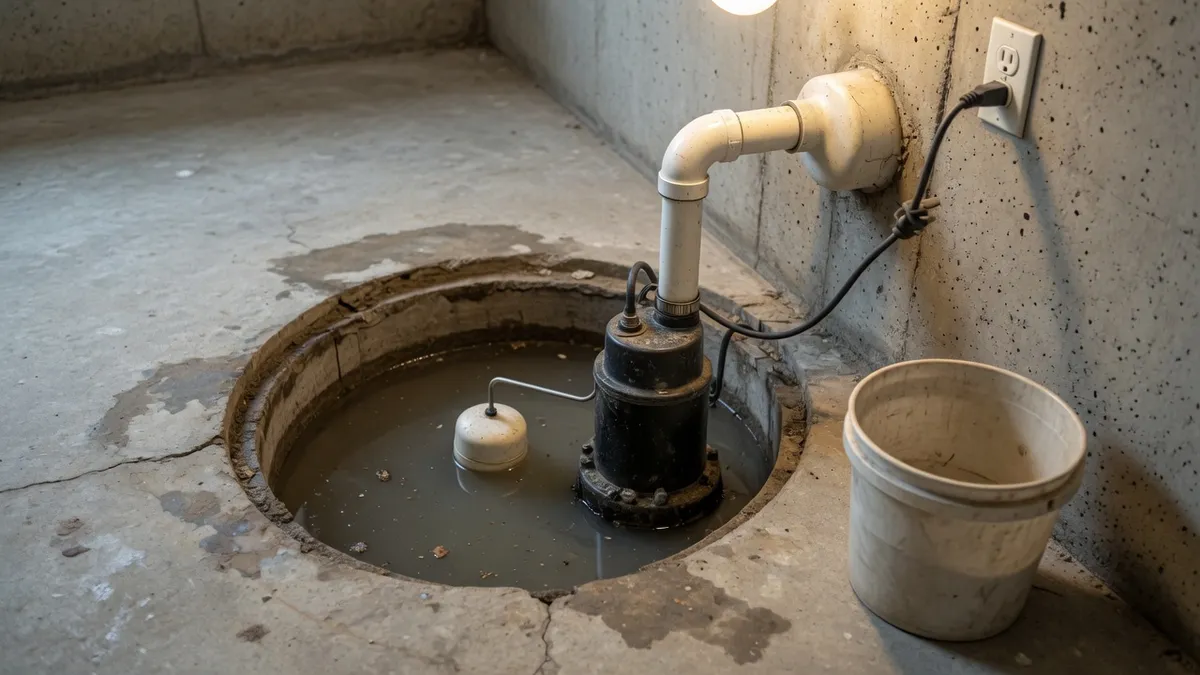
It is past midnight and you are three steps down the basement stairs with a flashlight, because the storm took the power. There is an inch of water at the bottom of the stairs, spreading toward the furnace. In the corner there is a hole in the concrete with a pump standing in it, silent. So what is a sump pump? It is the machine that keeps groundwater out of your basement, and yours has stopped.
Groundwater collects in that hole. A float switch rides on the water and closes when the water gets high enough, which starts the motor. The motor pushes the water up a pipe, through a check valve that stops it falling back, and out a discharge line into the yard. None of it works without power.
The top results for what is a sump pump stop at the parts. The storm that fills your pit is the storm that cuts your power. A pump with no power does nothing, and the water rises for as long as the outage lasts.
How they fail
Sources name the float switch most often, though none of them measures which part fails more. The pump shifts in the basin, the float jams against the side wall, and the motor never gets the signal. Or the switch sticks closed and the motor runs until it burns out.
The check valve wears, sticks, or goes in backward at installation, and the water drops back into the pit for the pump to lift again. Debris clogs the discharge line, and the basement floods while the pump still runs. Both of those look like a working pump to anyone standing at the top of the stairs.
Motor burnout usually follows one of those three, or an undersized pump. No source we found ranks them by frequency.
What it all costs
Search what is a sump pump and you will find the parts. The prices are harder to find.
Replacing a sump pump with a comparable unit in the pit you already have runs $400 to $1,200, average near $650. A sump pump battery backup is a second pump in the same pit with its own battery, and it runs when the power is out. Installed, it runs $600 to $1,200. Doing both in one visit can pass $2,000.
Across 2019 to 2023 the average homeowners insurance claim for water damage and freezing paid $15,400. Water damage and freezing was 22.6 percent of all homeowners claims in 2023, behind only wind and hail.
| Line item | Cost | Source |
|---|---|---|
| Replacing the pump, existing pit | $400 to $1,200, average near $650 | cost aggregators, 2026 |
| Battery backup, installed | $600 to $1,200, more when the pit needs work | cost aggregators, 2026 |
| Average water damage and freezing claim | $15,400 | Insurance Information Institute, 2019 to 2023 |
A $900 backup, the middle of that range, is about 6 percent of $15,400. Add a $650 pump and $1,550 is about 10 percent. Buy them in different years and you pay those two prices instead of the one visit price above.
That $15,400 is a national average, and your basement is not average. A finished basement with drywall, carpet, and a furnace passes it easily. An unfinished one with a concrete slab and some shelving might cost you a wet weekend with a shop vacuum. Price the backup against what is down there. If it is four bins of Christmas decorations, skip the backup.
How long a pump lasts
FEMA suggests considering replacement once a pump passes 10 years old. Home inspection guidance says seven. Most sources say 7 to 10 years, so an original pump in an older house is past due even if it ran last week.
The battery needs replacing every 5 to 7 years, and the quote will not mention it.
Pour a bucket of water into the pit
Testing yours takes a bucket of water on a dry day.
Pour it in and watch the float switch. It should lift off the wall of the basin and start the motor on its own. Watch the level after the motor stops. Water that rises again means a worn check valve. Then go outside while the pump runs and look at the end of the discharge line. Water should be coming out.
With a backup, the second pump empties the pit while you sleep and you hear about the outage in the morning. Without one, the average water damage and freezing claim is $15,400. That choice costs $600 to $1,200 and you make it before the storm.
This article is for informational purposes only and does not constitute medical, financial, or professional advice.