Why a House Smells Musty (And What Fixing It Actually Costs)
A musty house has a water problem. The three fixes run $1,000 to $15,000.
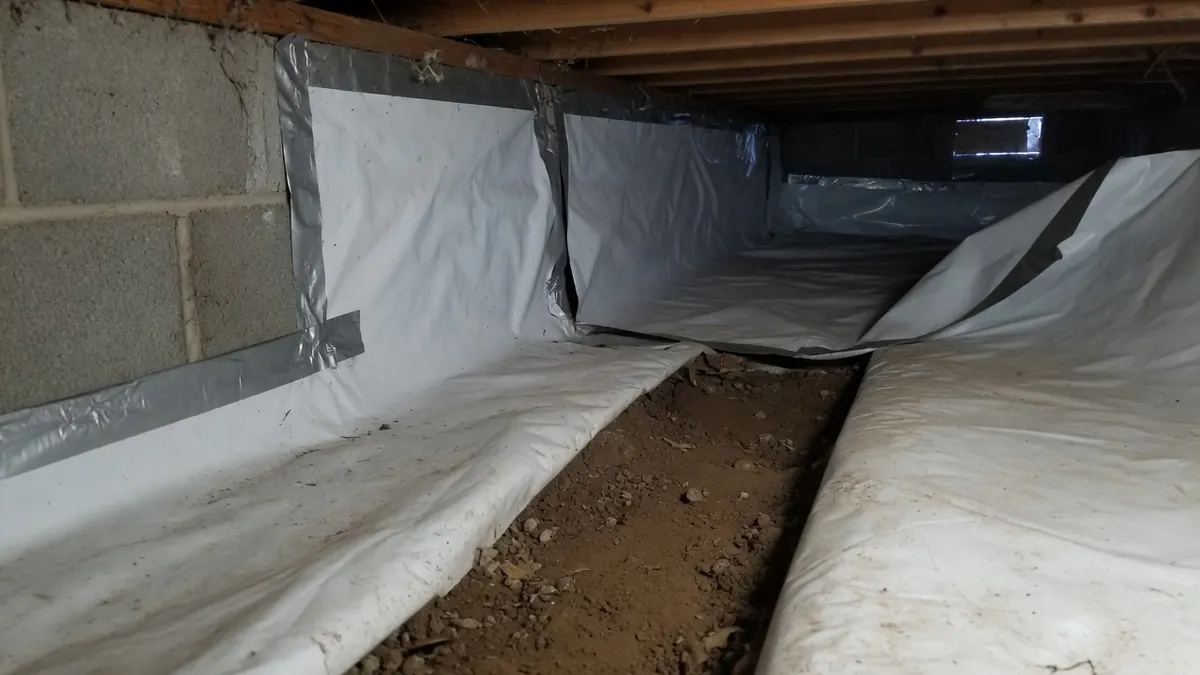
You come back from three days away, open the front door, and the house smells like a towel left in a gym bag. Twenty minutes later you cannot smell it. Your guests can. You have tried a candle and a week of open windows, and the smell returns every time the weather turns. So you searched it, and the first thing anybody offered you was a price for crawl space encapsulation.
What the smell means
A musty smell means dampness. The EPA treats a musty odor as a clue to dampness or hidden growth and stops there. It does not name a species or tell you what it is doing to anybody's health.
Crawl spaces with high relative humidity are common sites of hidden mold growth, especially where the floor is bare earth, and moisture that collects under the house passes up into the rooms through cracks in walls, floors and ceilings. The smell reaches you in the hallway and the water is under the floor.
Moisture control is the job
The EPA's guidance is two instructions. "The key to mold control is moisture control." And: "If you clean up the mold, but don't fix the water problem, then, most likely, the mold problem will come back." Fix the water. Clean up the growth that is already under there.
Keep indoor relative humidity below 60 percent, ideally between 30 and 50. Wet materials dried within 24 to 48 hours will in most cases not grow mold, so the question about your crawl space is how long it stays wet.
If you can see mold growing, the EPA says sampling is unnecessary. There are no federal limits for mold or spores, so a lab result has no standard to be measured against and will not change what you do.
Start outside
Before anybody prices work under the house, walk around the outside. Overflowing gutters, a downspout dumping next to the wall, and ground sloping toward the foundation put water against the house every time it rains. Water does not need a crack to get in, because soil wicks moisture from wet ground toward dry ground.
Two of those three have cheap fixes. Clear the gutters and repair the joint that overflows. Add an extension so the downspout discharges away from the wall.
The third is the ground itself. Where it cannot be regraded, because the house sits low or the lot next door drains toward you, the fix is a french drain: a gravel filled trench with a perforated pipe in it that catches groundwater and carries it away from the house.
Get the french drain priced before you price anything under the house. A drainage job can cost more than the encapsulation quote you are already holding, and no national range for it exists anywhere in the numbers below.
The three prices
These ranges come from contractor cost aggregators. Expect your own quote to land somewhere inside them.
| What you buy | What the money does | Typical national range |
|---|---|---|
| Crawl space dehumidifier, 70 to 90 pints a day, installed with a drain line | Pulls the damp out of the space you have | $1,000 to $3,500 |
| Vapor barrier over the dirt floor, 1,000 to 1,500 square feet | Stops ground moisture evaporating up | $1,250 to $3,500, or $1,500 to $4,000 where access is poor |
| Full encapsulation | Seals the space off from soil and outside air and keeps it dry | $5,000 to $15,000 |
The national average for encapsulation is near $5,500, at the bottom of that range. A $1,000 dehumidifier saves you $4,500 against that average. A $3,500 one saves $2,000.
Now read the first two rows together. A dehumidifier and a vapor barrier cost about the same, and buying both runs $2,250 to $7,000. Encapsulation starts at $5,000. So the sequence this article recommends can cost more than the job it is warning you about, and a house that needs both of the cheaper fixes is already spending encapsulation money.
Which one your house needs
One dehumidifier is enough where the source is outside and already fixed, the crawl space has a dirt floor, and no water stands on it. Sized for the space, it holds the humidity under 60 percent.
Bare soil is its own source. It gives up moisture into the crawl space whether or not it has rained, and plastic laid over the dirt stops the moisture at the floor.
Where both of those are true at once, price crawl space encapsulation against the two cheaper jobs together rather than against either one. The same goes for a crawl space that still climbs past 60 percent in summer after the water outside is fixed and the dirt is covered, because the damp is then arriving through the vents. A sealed crawl space with insulation at the perimeter does better than a passively vented one with insulation under the floor, on pests, on comfort, on moisture durability and on energy use. It is held at roughly 45 to 55 percent relative humidity by supply air from the house or by its own dehumidifier, and code requires one or the other. Encapsulation includes a dehumidifier.
Sealing a crawl space also changes how air moves through it. A furnace or water heater burning fuel down there needs combustion air, and a sealed space can change how soil gas including radon reaches the rooms above. Ask about both before anybody tapes plastic to the walls.
So the case against crawl space encapsulation is a case about order. Plastic taped over a floor that is still getting wet leaves the water where it was, and the outside work that would stop it is the one part of this with no published price. Get that quoted first.
What to do this week
Wait for the next hard rain and go outside in it. Five minutes in the rain shows you where the water goes. Photograph every place it runs toward the house.
Then ask every company that quotes you two questions before you read the number. What does the relative humidity read in the crawl space today? Where is the water coming from? A reading taken in a dry week tells you nothing, so ask for it again after heavy rain.
You will know it worked when you come home after three days and smell nothing. Get the outside water priced before you sign for anything underneath, because what you find out there decides which of the three you need.
This article is for informational purposes only and does not constitute medical, financial, or professional advice.