What Semi Formal Attire Actually Means (In Plain English)
A suit in charcoal, navy, or mid grey, a dress that stops short of the floor, and a start time that decides the tie and the colors.
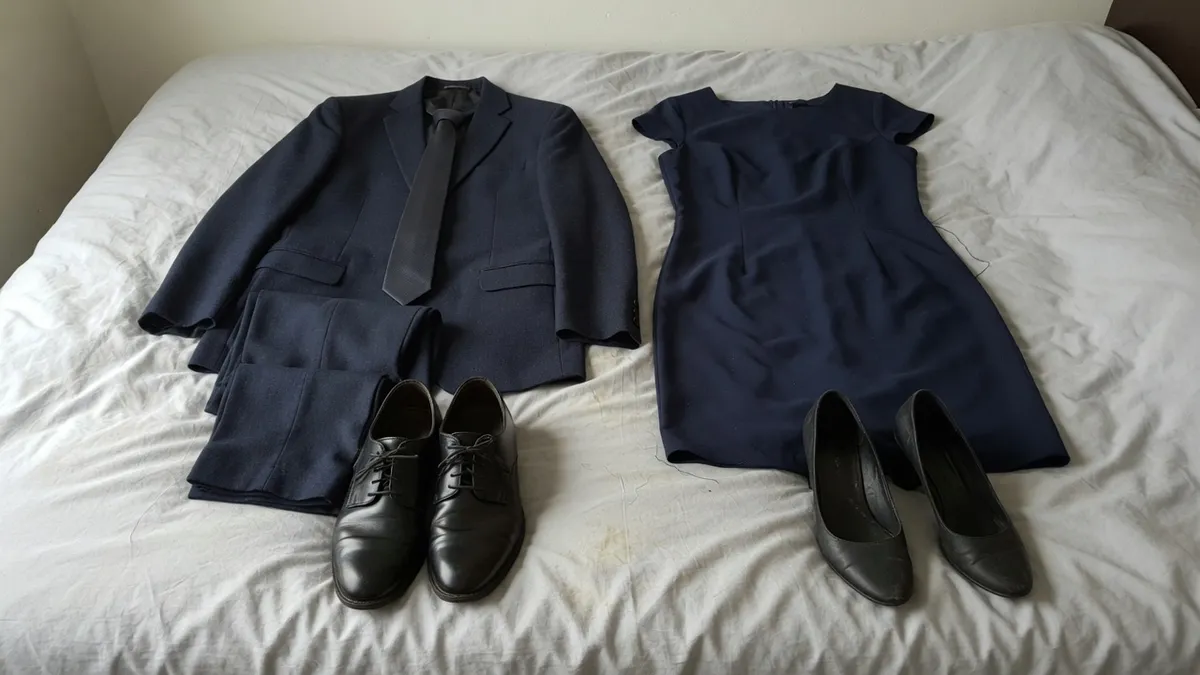
The card has been on the refrigerator since June, and tonight you finally read the two small lines under the names: semi formal attire, and Saturday at two o'clock. You are standing at the closet with the navy suit that has been to three weddings, a white shirt, and one tie, and you have looked the phrase up twice and gotten the same list of clothes back both times. Neither list said whether the tie goes on.
Semi formal is a well fitted suit in charcoal, navy, or mid grey with a dress shirt, or a knee length dress, a midi, or a dressy jumpsuit. It sits below black tie optional and roughly beside cocktail, and hosts often print those two names interchangeably, so a card that says cocktail asks for the same clothes. A tuxedo or a floor length gown overshoots the request, and a polo shirt undershoots it.
The other line on the card
Semi formal allows more outfits than any dress code above it and says less about which one to wear, so something on the card has to narrow the list, and the start time does, printed one line below the dress code. A ceremony at two and a dinner at seven can both print semi formal attire, and the same clothes go darker for the evening. At seven the tie goes on, because an evening room and a seated dinner expect it, and the suit and the dress come from the dark end of the list. At two the tie is your choice, and the colors and fabrics lighten.
If you are wearing a suit
Wear the suit you own if it fits through the shoulders, with a white or pale blue dress shirt and polished leather shoes. A navy suit that pulls across the back photographs worse than a navy suit that hangs straight.
Charcoal and navy are the evening colors. Mid grey is the daytime one, in a church or a hotel ballroom as much as in a garden, and navy at two with the collar open looks finished.
If you do not own a suit, wear a blazer or a sport coat over trousers that do not match it, in those same colors, with a dress shirt and leather shoes. The jacket is the part the dress code wants. Matching the trousers to it is what makes a suit, and semi formal never asked for one.
If you are wearing a dress or a jumpsuit
Knee length, midi, or a dressy jumpsuit meets semi formal attire at either hour.
At seven, a midi in satin or crepe in a deep color belongs at a dinner table. At two, a knee length dress in chiffon or a cotton blend, in a floral or a pale color that dinner lighting would wash out, looks right in a church or a ballroom. If the ceremony is on grass, a block heel or a flat stays on top of it and a thin heel sinks.
If you are the host writing the invitation
Write the hour into the one sentence on the wedding website:
"Semi formal attire for a two o'clock ceremony: suits with or without a tie, knee length or midi dresses or jumpsuits, and lighter colors welcome."
A host with a seven o'clock dinner swaps three phrases: seven o'clock dinner for two o'clock ceremony, with a tie for with or without a tie, and darker colors for lighter colors.
The navy suit comes down and the white shirt goes under it. Put the tie in the jacket pocket and decide in the car. There is no dinner room waiting at two, and a guest who wears one anyway has not overdressed.
This article is for informational purposes only and does not constitute medical, financial, or professional advice.