Who Gets a Save the Date (And How Far Ahead to Send It)
Mail it six to eight months out, longer when guests travel, and only to people whose invitation is already decided.
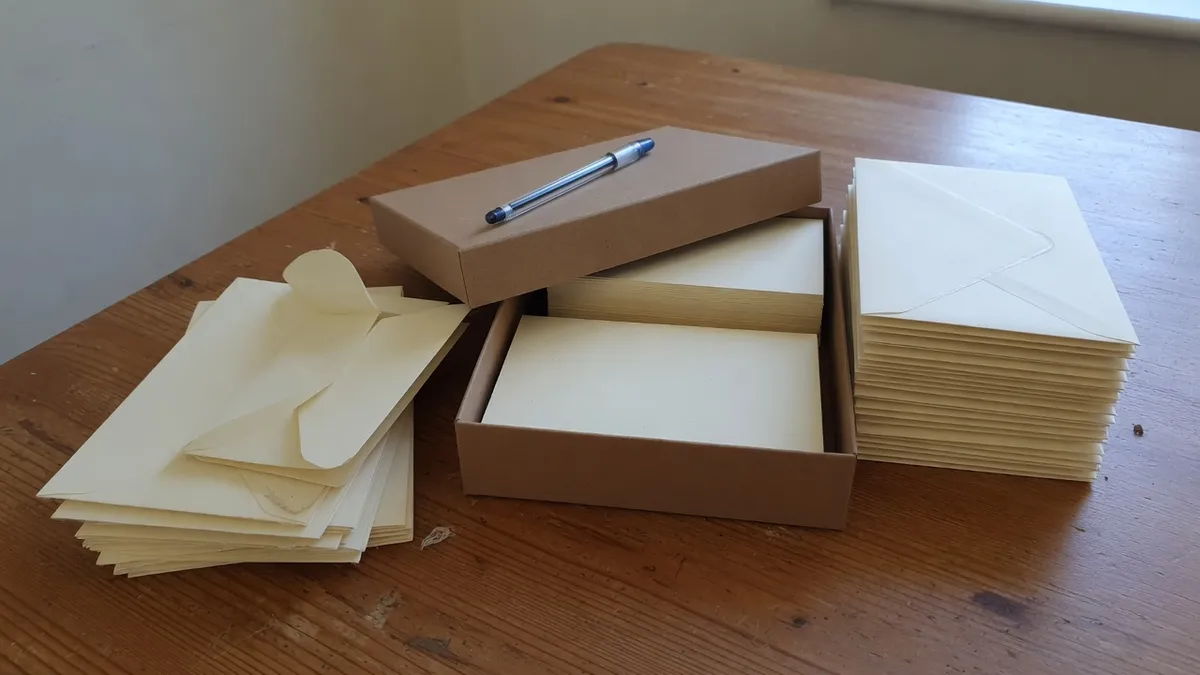
The cards came in a box of 150, and the box is open on the kitchen table with your date printed on every one. The laptop beside it shows the guest list, and fourteen rows are still highlighted yellow. It is the first week of November, the wedding is the second Saturday in June, and every timeline you have read says a save the date goes in the mail at six to eight months out. So tonight you are addressing envelopes, and those fourteen rows are about to get one.
For a wedding most guests can drive to, mail the card six to eight months before the date. When most guests have to fly, or the date falls on a holiday weekend and fares and hotel rooms go first, move the window out to eight to twelve months. Under four months it arrives after people have planned their season, and the invitation is close behind it. Over a year ahead you are asking people to hold a Saturday they cannot yet picture; jobs change, leases end, babies arrive, and a date held that far out gets released.
Count back on a calendar. Your June wedding, mailed at eight months, leaves the house in the second week of October. At six months the card lands in mid December, mixed in with holiday mail, so mail it in October. A June wedding where the guests fly, mailed at twelve months, goes out the June before.
Who gets one
A save the date goes only to people who will receive an invitation. The person who receives one tells their boss the week is taken and buys a fare. Cut them from the list after that and no follow up note refunds the fare. A guest can still get an invitation without a card.
When does the guest list have to be final? The invitation mailing date looks like the answer, and the card moves it up to the night the first envelope is sealed. The six to eight month window only tells you which night that is. Plus ones are part of the guest list, so each one is decided before the first card.
The same night settles the second list, the names you meant to invite if enough of the first list declined. A card moves a name in one direction only: mail one to a household on the second list and they are on the first list for good. So the guest list can grow between the save the dates and the invitation and it cannot shrink, and the venue has to fit every household you mail a card to before the first one goes out.
What to do with the yellow rows
Tonight, every highlighted row becomes yes or no. A yes gets a card. A row you cannot decide gets none and stays alive on the list, because the invitation comes later and a maybe belongs there. If a seat opens or a budget line loosens between now and then, that household gets an invitation on the same day as everyone else. If the seat stays closed, you owe them nothing, because the promise was the card and it stayed in the box.
A maybe row is one reason to hold a card back, and an unsettled date is the other. A card is as firm as the contract behind it. If the venue is held on a deposit you could still lose, or the date depends on a permit or a family member's surgery schedule, wait until the date is settled, even when waiting pushes you past eight months. A guest who gets a card and then a date change has the same problem as one who was cut. Six months is still inside the window.
Back at the kitchen table, the fourteen highlighted rows get decided first, and then the box of 150 goes out to a finished list.
This article is for informational purposes only and does not constitute medical, financial, or professional advice.